Patients treated with WELTRUZA saw a reduction in their illness severity and improvements in their personal and social functioning1
Significant decrease in illness severity (CGI-S) with WELTRUZA versus placebo1
Illness severity was evaluated on the CGI-S scale, a 7-point scale defined by a clinician’s impression of the patient’s condition.1
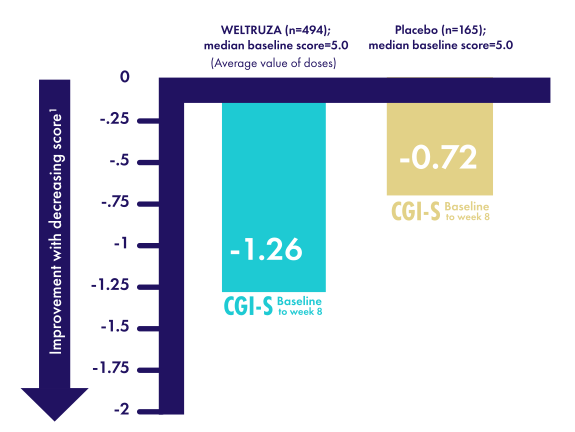
By week 8, WELTRUZA patients experienced a 1.2- to 1.3-point reduction from baseline compared with a 0.72-point reduction for placebo.1

~26% reduction in illness severity from baseline compared with 15% for placebo.1,2

CGI-S scores were reduced by 1.19 to 1.33 points from baseline with WELTRUZA and 0.72 points for placebo. Higher scores indicate a more severe illness, with a range from 1 (not at all ill) to 7 (extremely ill)1
Least squares (LS) mean difference (95% CI) versus placebo: -0.53 (-0.75, -0.31), -0.61 (-0.82, -0.39), and -0.47 (-0.68, -0.25), for 318 mg, 425 mg, and 531 mg, respectively (P<.0001)1
Significant improvement in personal and social performance with WELTRUZA versus placebo1
The PSP scale evaluates personal and social functioning, measuring socially useful activities, personal and social relationships, self-care, and disturbing and aggressive behaviors.1
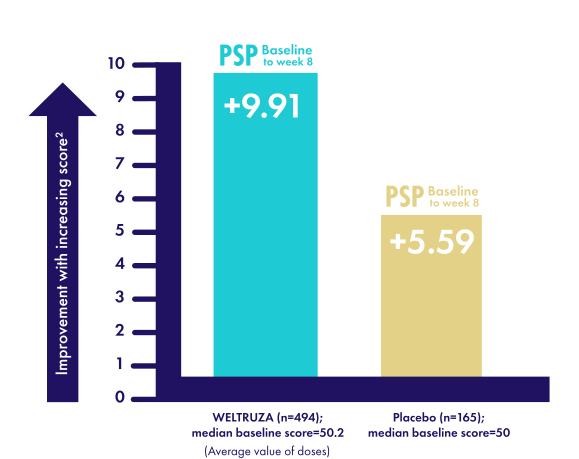
By week 8, WELTRUZA patients experienced an ~9- to 11-point improvement from baseline compared with an ~5-point improvement for placebo.1
~20% improvement in personal and social functioning from baseline compared with 11% for placebo.1,2
PSP total scores improved by 8.8 to 10.6 points from baseline with WELTRUZA and 5.6 points for placebo. Outcomes of the PSP are measured on a 100-point scale in 10-point increments, where higher scores indicate better functioning1,2
LS mean difference (95% CI) versus placebo: 4.72 (2.05, 7.40), 3.24 (0.59, 5.89), and 5.01 (2.35, 7.66), for 318 mg, 425 mg, and 531 mg, respectively (P<.02)1
Measurements in Schizophrenia Quality of Life Scale (SQLS) across all doses
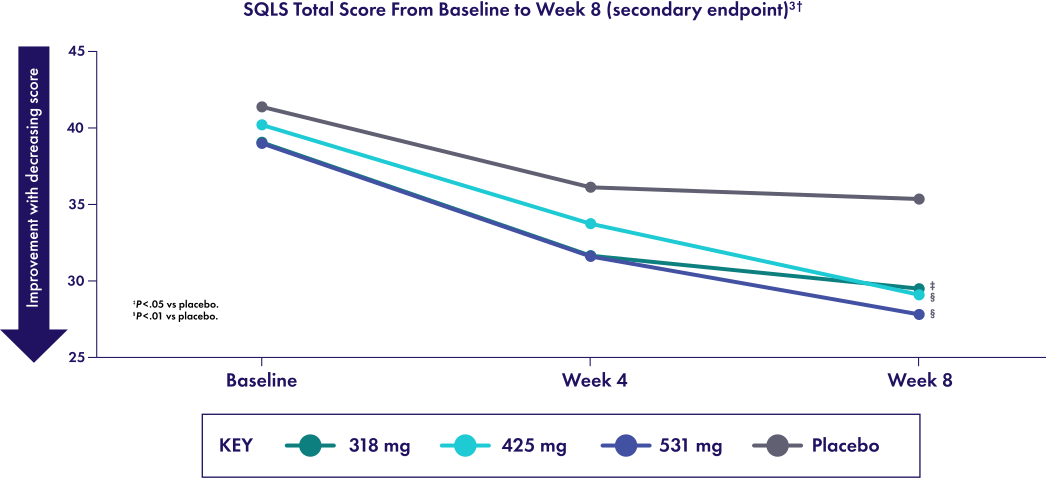
†SQLS captures quality of life with a 33-item measure, with 2 subscales for psychosocial feelings and cognition and vitality, where higher scores indicate worse quality of life.4
SOLARIS also looked at broader measures of clinical improvement, patient-reported change, quality of life, health status, and safety.2
LS mean differences from baseline to week 8 compared with placebo were -3.99, -5.39, and -5.65 for WELTRUZA 318 mg, 425 mg, and 531 mg, respectively2
No determination of statistical significance can be made, and no conclusions can be drawn from this analysis
up next
Safety data
WELTRUZA demonstrated a systemic safety profile consistent with oral olanzapine.
SEE THE DATAReferences: 1. WELTRUZA™ (olanzapine) extended-release injectable suspension Current Prescribing Information. Parsippany, NJ: Teva Neuroscience, Inc. 2. Data on file. Clinical Study Report. November 2025. Parsippany, NJ: Teva Neuroscience, Inc. 3. Correll CU, Shulman K, Bar-Nur T, et al. Monthly olanzapine extended-release injectable suspension (TV-44749) for subcutaneous use leads to early, consistent symptom improvements through week 8 in adults with acute exacerbation of schizophrenia: phase 3 SOLARIS trial. Presented at: Schizophrenia International Research Society (SIRS) 2025 Annual Congress; March 29-April 2, 2025; Chicago, IL. 4. Taha NA, Ibrahim MI, Rahman AF, Shafie AA, Rahman AH. Validation of the schizophrenia quality of life scale revision 4 among chronic schizophrenia patients in Malaysia. Value Health Reg Issues. 2012;1(1):82-86.