The SOLARIS clinical trial for WELTRUZA™ studied improvement in symptoms and personal and social performance in adult patients1*
The pivotal trial was a phase 3, randomized, double‑blind, placebo‑controlled study with a 48-week, open-label safety phase to evaluate the efficacy, safety, and tolerability of once-monthly WELTRUZA in adults with schizophrenia experiencing acute symptoms.2

Primary endpoint: Change in Positive and Negative Syndrome Scale (PANSS) total score from baseline to week 82
Key secondary endpoints: Change in Clinical Global Impression—Severity (CGI-S) and Personal and Social Performance (PSP) scale scores from baseline to week 82
Sample size: 675 participants were randomized to the acute treatment phase and 423 participants were rerandomized in the long-term safety phase2
*In the open-label safety period of the study, patients treated with WELTRUZA demonstrated sustained improvements in PANSS, CGI-S, and PSP scores through 48 weeks of treatment.1
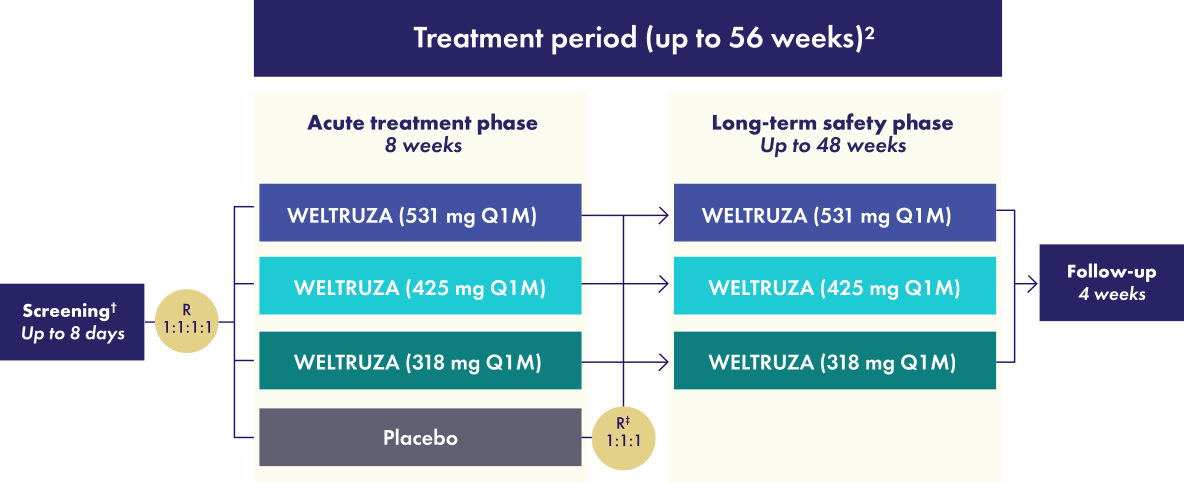


Long-term safety phase (up to 8 weeks)
†Participants who had not received olanzapine within the last year were required to receive 2 doses of oral olanzapine to assess participant tolerability.
‡All participants were rerandomized between the acute phase and the long-term safety phase to maintain the blind; active treatment groups retained their acute phase treatment assignment and the placebo group was randomized to 1 of the active treatment groups in a 1:1:1 ratio. Long-term safety phase treatment assignment reveal was performed after week 8 (visit 11).
Eligibility criteria included: 18 to 64 years old, current confirmed diagnosis of schizophrenia according to the Diagnostic and Statistical Manual of Mental Disorders (Fifth Edition) for >1 year, PANSS total score between 80 and 120.§ Patients were also required to have a CGI-S score of ≥4 at screening and baseline.2
§Inclusive, at screening and baseline, with a score ≥4 on at least 2 of the following 4 PANSS positive subscale items: hallucinatory behavior, delusions, conceptual disorganization, or suspiciousness/persecution.
Patient characteristics in SOLARIS2
WELTRUZA was examined in a clinical study designed to represent those typically managed in clinical settings. The patient population consisted of adult patients with schizophrenia experiencing acute exacerbations requiring hospitalization. Illness severity and clinical characteristics were consistent with the target treatment population.
15%
were 18 to 30 years old¶
67%
were Black or African American¶
76%
had not previously taken olanzapine¶
| n (%) unless otherwise denoted | Total WELTRUZA (n=507) |
|---|---|
| Median age (range), years | 45 (18-64) |
| 18-30 years¶ | 74 (15) |
| Male | 381 (75) |
| Race or ethnicity | |
| White | 151 (30) |
| Black or African American | 341 (67) |
| Asian | 9 (2) |
| Hispanic or Latino | 104 (21) |
| Median disease length, years | 18.7 |
| Prior use of olanzapine | 122 (24) |
| Median PANSS score | 95 |
¶In the WELTRUZA group only.
up next
Efficacy: primary endpoint
Discover symptom improvement across all WELTRUZA doses.
SEE THE DATAReferences: 1. WELTRUZA™ (olanzapine) extended-release injectable suspension Current Prescribing Information. Parsippany, NJ: Teva Neuroscience, Inc. 2. Data on file. Clinical Study Report. November 2025. Parsippany, NJ: Teva Neuroscience, Inc.